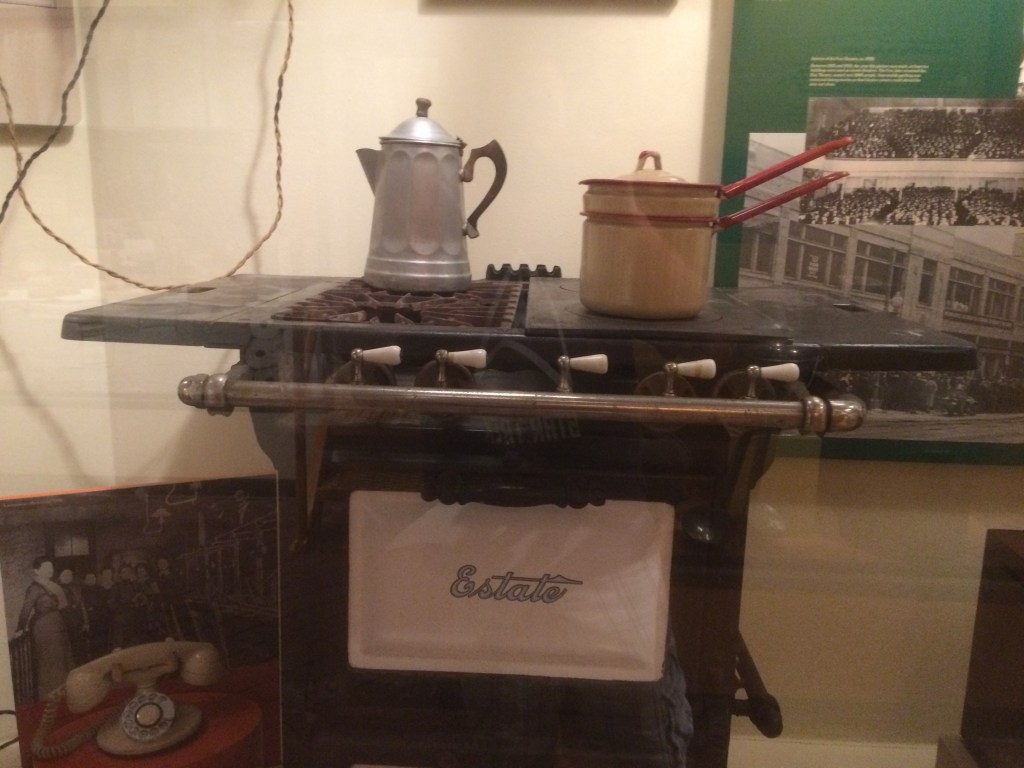
Fur trading post, Toilet Paper Capital and the many other identities of Green Bay.

There is a unique past apart from the Packers in Green Bay, Wisconsin. Although America’s smallest sports town boasts a team noted for its history and tradition, the area has been witness to other lore much older and just as fascinating. In fact, four years before the Packers first took the field, a museum was founded in the basement of the local library paying homage to some of that history.
The Neville Public Museum, founded in 1915 and moved to its present location in 1983, is the best collection, under one roof, of historical relics from Green Bay and the surrounding area. The exhibits showcased in the museum are diverse. As it starts off with geological specimens, the permanent exhibit chronologically presents its collection, showcasing machines, common place items and art of a bygone era.
Skeptical? Are you wondering how much history could possibly be linked to Green Bay? After all, Wisconsin wasn’t a state until 1848 and Green Bay is part of Wisconsin. Consider this, Green Bay was under the rule of two different European nations before it became territory of the U.S.. However, that was only 10,000 years before the first inhabitants happened upon Northeast Wisconsin.
The story starts before the first human ever set foot in Wisconsin, as geological exhibits in the museum indicate, this area was once a seabed in a tropical climate. The land was subject to drastic changes throughout the ages, including the Ice Age. After the last Ice Age, Paleo-Indian people came to north America via a land bridge and hunted large game in the area, including mastodons. Tools and weapons from prehistoric civilizations are exhibits in the museum.
Exhibits celebrating Jean Nicolet and Claude Allouez , the first European settlers, are also presented in the Museum. Nicolet came to Green Bay in 1634 and  claimed the land for the French king, naming the area la Baie Verte.(the green bay) In 1871 Claude Allouez became the first permanent visitor, settling in near by Rapids Des Peres, (Depere) aspiring to convert the natives to Christianity.
As I wound through the Exhibits, my eyes upon what were, for me, discoveries of machines, trinkets and tools swallowed by time, I imagined the dirt roads, the creaky houses, and the rudimentary clothing as evidenced by the museum. Green Bay would have been a very different place, a town amongst the wilderness.
Also, you realize that this city has evolved, starting from its first industry introduced by Jean Nicolet-fur trading. Lumber Jacks and commercial hunters and fisherman all made livings in the area at one time. Over the years, coopers and beer brewers and many other professions have been part of the city and area, as evidenced in exhibits in the museum.
Perhaps the biggest industry of Green Bay for more than 120 years is thanks to the water ways. Being on the Fox river and surrounded by trees, Green Bay was prime territory for paper mills. A break through in 1895 in a rather less than glamorous industry gave Green Bay yet, a new Identity. The invention was, of all things, toilet paper that didn’t leave splinters, making Green Bay the primary source for this restroom staple.
I could tell your more, but I’ll leave that for your own journey to the museum.
The permanent exhibit is not large, rather quaint and midsized. However, its contents spark  interest in a detailed overview of the city’s progression through the ages. Children, despite the lack of interactive displays, would gain a great deal of knowledge, exposed to tangible evidence of the past rather than a text book.
Accenting the packers heritage trail head, the museum rests downtown just off of Dousman Ave, overlooking the Fox River. The building is two stories high, pronounced with a very modern appeal. Being quite spacious, it’s size allows for three temporary Exhibits besides the permanent one. (which occupies a portion of the second floor) Exhibit themes and dates are available on the Neville Public Museum website.
My own personal experience, having visited the museum twice in as many years, leads me to the conclusion that only one of three temporary exhibits will peak my interest. This time around, it was 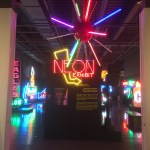 the Neon exhibit. I did not see info about the signs in the room, but its amazingly eye appealing. I imagined wandering the warm streets of Las Vegas during the fifties, as I was delightfully surrounded by dozens of signs in an unlit room.
If I have complaints about the museum, my first would be, besides the addition of a rather lack luster Packer exhibit, the museum hasn’t been updated. What about Wisconsin’s family dairy farmer? That is becoming a thing of the past, isn’t it? Possibly, something that tells of school life or office life in the not so distant past, even old computers could now be considered somewhat of a relic.
My second complaint would be the temporary exhibits. Like I said, only one of three were interesting. I realize this is a way to attract repeat visitors, but I think the amount of space that these exhibits occupy could be used better, perhaps expanding the permanent exhibit.
Besides the small complaints, my trip to the museum brightened my day. There really are many interesting things to investigate from arrowheads to automobiles. At an admission of $7 an adult with children 5-15 yrs admitted for $3(under 5 are free), it really is an inexpensive, fun, interesting and educational way to pass some free time.


 Chris Writing Anything
Leave a reply to Beth Lemke Cancel reply